17 October 2011

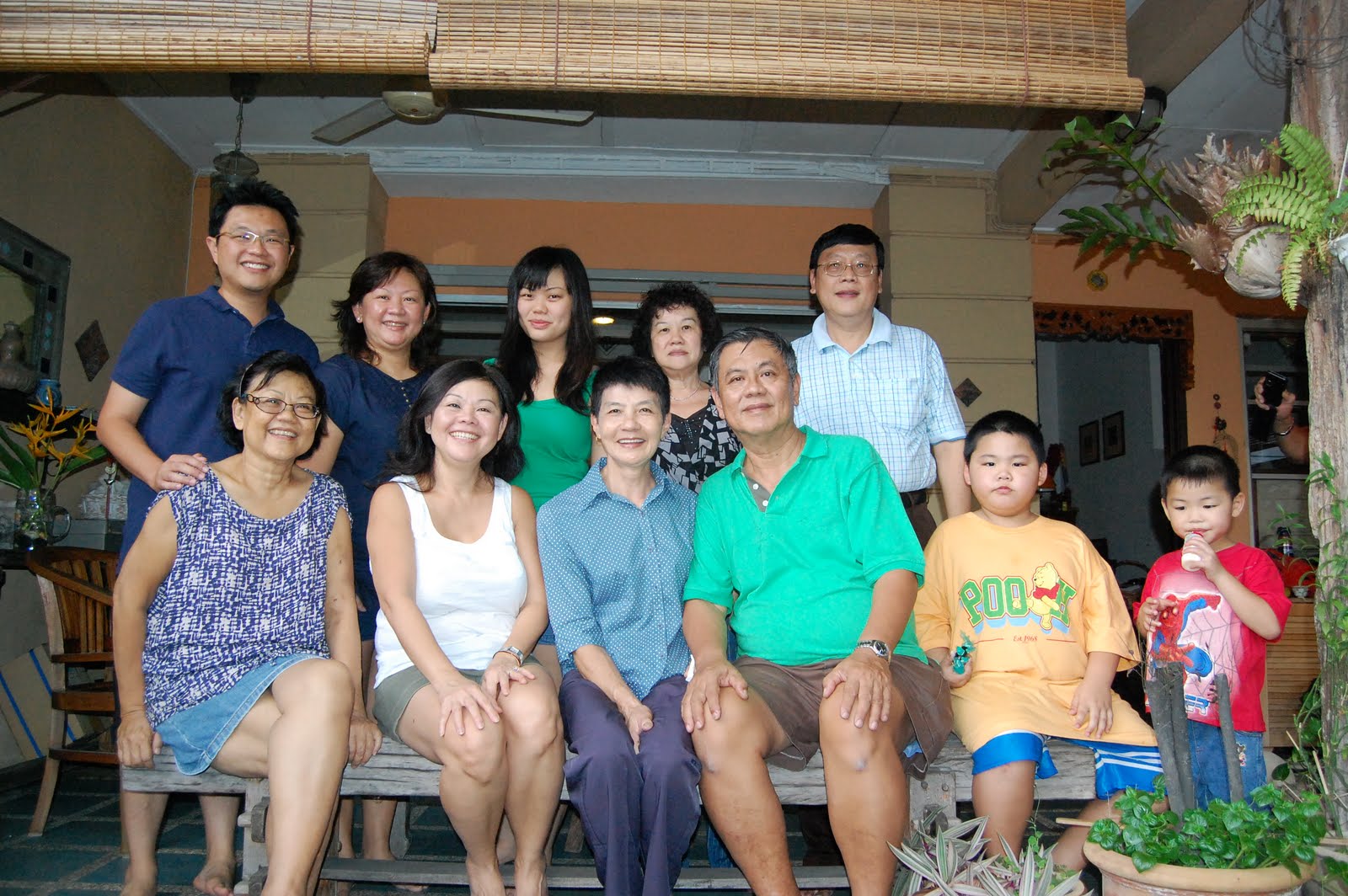
Potluck Lunch At Trudy's Place

We had a little potluck lunch for Jolie and Allen at Trudy's home in Damansara Ara on Sunday 16 October 2011. It's a small reunion of sorts for those who turned up and we had lots to eat and catch up with the latest family news. A beautiful and joyous occasion especially with all the little kids running around.


26 February 2011

46. The Final Legacy


There are many valuable lessons we can learn from father Chung Chow: through his words, actions and fine example. He often talked about three family guidelines that were passed down from one of our ancestors Zeng Can who was a disciple of Confucius.

These guidelines or value ethics were built upon Confucius's early version of the Golden Rule: "What one does not wish for oneself, one ought not to do to anyone else; what one recognises as desirable for oneself, one ought to be willing to grant to others", and also Confucius's great emphasis on the importance of study.

These guidelines can help us live in harmony and be successful. They are held in high regards because they honour our forefathers and are for the younger generations to follow.

The first guideline is to give a third thought before one speak or act. One should not only think twice but thrice about the consequences of one's words or actions. One should not make decisions in haste without much thought, but to carefully and patiently think through its implications. It has similar connotation as the English phrase "look before you leap".

The second guideline is to fulfill one's responsibilities towards others. This is based on the values of integrity, honesty, trust, truthfulness, and sincerity. The example given by father is about one's responsibility to fulfill a promise, in this instance to repay money owed. If one promises to do so on a certain date, then one must do it.

The third guideline is to be diligent and excel in one's work and study. No matter what one's profession or livelihood is, one must work hard and do one's very best. If we can follow and practise these three guidelines daily, we will achieve harmony within ourselves and with others, and be successful in all the things we do.

Potluck Lunch at Trudy's Place

25 February 2011

45. Happy Reunion

On February 8, 2002, father started to have breathing difficulties and the home sent him to the hospital for emergency treatment. He was given a ventilator to help him breathe. Although he was semi-conscious, he was aware that all his loved ones had gathered around to see him for the last time. When asked what he was doing, he told us with a smile on his face that he and mother were on a world tour on board a big ship.

The next day, his condition did not improved. We knew how dearly he wanted to be with mother again, and we decided not to delay his departure from this world no matter how much we would miss him. No sooner had Suit Meng signed the consent forms to discontinue the support system, and stepped into the room, father took a deep breath and slowly released it, sort of like a sigh of relief as if to signal his approval, and breathed his last breath.

He was very calm and peaceful even at the very last moment, and had on a happy and serene face when he passed away at exactly 10.30 p.m. on February 10, 2002 - the night before the eve of Chinese New Year. He was 87. He used to jokingly tell us, patting his heart, that this "old engine is worn out and will give way one day", and it did as the doctor reported his death as cardiac failure.

As the hospital attendant wheeled our late father's body to the mortuary, three of his grandsons - Tony, Joseph and Chin Leon - and myself followed close behind like guards of honour. We wanted to make sure that his body was sent to the morgue safely.

The next morning, the eve of Chinese New Year, father's coffin was taken to the Prestavest Memorial Park near Taman Semerak in Pokok Assam. Father had always wanted a quiet affair with only close relatives and friends in attendance, and his wish was fulfilled. It was almost noon when his coffin was placed at the crematorium. His was the last service of the day. After that, the facility closed for five days for the new year celebrations.

On the morning of February 15, we collected his ashes from Prestavest, and his urn was interned besides mother's at the Buddhist temple, Wat Phodhiyaran, in Assam Kumbang. Also laid to rest at the same place were our grandparents Chang Ah Kee and Wong Sui Cheng, uncle Chang Keng San, granduncle Chan Ting Yang and his wives, great granduncle Chan Kau Sing, granduncle Yin Kau, and uncle Ah Choon and his wife.


Auntie Loke, father's last surving sister at 
Wat Phodhiyaran, in Assam Kumbang

Wat Phodhiyaran, in Assam Kumbang

Wat Phodhiyaran, in Assam Kumbang


Our father Chung Chow will be best remembered for his total commitment and love for his family as a filial son, a caring brother, a devoted husband, and a loving father.

He took great care of his parents, brought up his siblings, and provided for his wife and children all by himself. He was a very hard-working man with very simple needs. He was also a very pleasant, tolerant and considerate man. He was very special to us - someone whom we loved very much, admired fondly, and felt very proud of.

Next: 46. The Final Legacy »

44. MI Home


Chung Chow


During the later half of 2001, his health began to deteriorate. His legs were failing him and he had difficulties walking around and needed a wheel-chair. It was father's decision to stay at the MI Home, a private old folks cum nursing home in Aulong New Village. He wanted it that way as there would be attendants around the clock to take care of his needs. The attendants were very helpful and attentive, and he was happy there.

He had a lot of visitors - his own children, grandchildren, great-grandchildren, in-laws, relatives and friends, and he never felt lonely. Everyone of us visited him on a regular basis. Even See Kun and Gigi made a special trip home from Maryland, U.S. in August 2001 to be with him for the last time.

Next: 45. Happy Reunion »

43. After Mother's Death


House in Kampung Boyan


We were afraid that father would succumb to loneliness after mother had passed away. However, he was a very patient man and accepted that "these things just happened without reason". He would often say: "It is all fated." He was a very soft-spoken and pleasant man who never raised his voice to anyone. He was also very tolerant and considerate. Even when he was angry, he kept the frustrations to himself, and he seldom complain.


Chung Chow


After mother's death, father moved in with brother Chew Tai at 172, Lorong 18, Taman Sri Kota, Taiping. However, when brother Chew Tai decided to sell his house and move to his in-law's house in Tupai, father moved in with me at Taman Lake View.

He was a very simple man with very simple needs. In the mornings, he would sit in the porch, listen to the birds sing, read the Chinese newspaper, and watch the neighbours go by. He preferred home cooked dishes. Three meals a day was his standard fare, and no supper. He usually eat one bowl of rice, sometimes a little more if he was hungry, and he never over-eat. He used to say: "eating to three-quarter full is better than a full tummy". In the evenings, he would watch some TV programmes, and his favourites were documentaries, and go to bed around 10.30 p.m.

Next: 44. MI Home »

02 February 2011

42. Demise Of A Beloved Mother


Lee Mooi


Almost a year later, fate would dealt us a devastating blow that snatched our beloved mother away from us.

It was Tuesday, August 18, 1998. As usual, mother would do her morning marketing at the mini-market behind the house. On that day, she had bought some fresh kueh-teow and vegetables to cook lunch. After that, she and father watched their favourite Chinese drama show on TV.

When the show was over, mother felt hot and sweaty and went to take a bath. She was in the bathroom for quite some time, so father called out to her. But, there was no reply. He then tried frantically to open the door but it would not budged. He telephoned brother Chew Tai who came over as quickly as he could. Together they forced open the door. Mother was unconscious and was sitting on the bathroom floor with her back to the door.

Chew Tai called for an ambulance and it arrived a short while later to ferry mother to the hospital where she was warded at the Intensive Care Unit or ICU.

I just arrived home from work that day when I received a call from brother Chew Tai informing me about mother's condition. I went immediately to the hospital and saw several nurses moving in and out of an enclosed unit at the ICU. They had drawn the shades around her bed.

I then realized it was a very serious case. The doctor told me that she suffered a stroke on the back of her head, and they wanted to send her to the Ipoh general hospital for urgent treatment. However, a short while later, one of the nurses waved to the doctor to come and attend to mother. Though her bed was enclosed by the shades, I could see and hear some frantic and noisy activity going on around her. Then, everything became quiet and calm. The doctor came out and told me that mother had succumbed to a stroke and there was massive hemorrhage in her brain.

Mother Lee Mooi died quickly and without pain at 7.50 p.m. She was 75. At that very moment of her death, sisters Sweed Cheng and Suit Meng, who were in PJ, recalled that they felt mother calling out to them. They knew something had happened to her.

When I told father the tragic news, he was overcame with grief. He kept repeating to himself: "You are well this morning. Now, you are gone. Why do this thing happened?". There were tears in his eyes. After a few minutes, he regained his composure, stood up and bravely said: "These things happened without reason. It is all fated".

We did not expect our mother to die so suddenly as she seemed well and healthy. She had not complained of any serious sickness except for her aching joints and legs. We didn't have a chance even to say goodbye. Her demise left such a huge void in the family that we felt lost without her. The nest that she had created all these years suddenly became so empty and cold. The family reunions and gatherings that followed were never the same without her presence. I still recall her caring for us when we were young, and how she struggled to clothe and feed us. She was very thrifty and sacrificed a lot of her own needs so that we could have ours first. She had worked very hard and had devoted her entire life to her loved ones.

Her unreserved love and affection for us made her one of the best mother we could ever wish for. She was also very friendly and kind, and her many friends is a testimony of that.

I can recalled vividly a very touching incident that happened one evening in front of our house in Tupai Road. It was raining heavily, and a young hawker selling wantan-mee managed to take shelter in the 5-foot way of our house. He was drenched and shivered in the cold. Without much thought, mother quickly went into the house, took out one of our tee-shirts and gave it to the young man. It was a spontaneous gesture and a kindly act of concern a mother would do for her children or any young ones.

Her funeral was held on the August 22, 1998. It was just as grand as our grandmother's funeral that happened 43 years ago. Many of our relatives, friends, colleagues and those who knew her came to pay their last respect. Her funeral rites were performed by a group of Taoist priests led by a clansman, Chang Soo Har who is the grandson of a Taoist priest popularly known as "Red Nose" and a colleague of our grandfather.

Our mother's body was cremated at the now defunct Buddhist crematorium at Taman Panglima in Assam Kumbang. Her ashes were then interned at the Wat Phodhiyaran or Buddhist temple's columbarium in Assam Kumbang. One very interesting coincidence that happened during her funeral was that the total expenses incurred almost equal to the total contributions and donations received. She had taken care that her death would not be a burden to us.

Next: 43. After Mother's Death »

41. HouseTaken Away

One unexpected event that took place in 1996 was when our parents were informed to vacate the house at 15 Tupai Road by the new owner, Mr. Leong Kum Weng. The previous owner, Mr. Manecksha, had told our parents that they could stay in the house as long as they like as he had no intention of selling it. However, his son who inherited this property when his father died, sold it without informing our parents. Our parents had no choice but to vacate the house which they had lived for almost 54 years. They received some compensation from the new owner before they finally left the house in December of 1996.

In the beginning, our parents stayed at Chew Kiat's home in Bukit Mertajam. But, they dearly missed all their old friends, the food and the environment they had been so used to that they decided to move back to Taiping. In September 1997, they returned to Taiping where they had rented a single-storey terrace house at 237, Lorong 1, Taman Bersatu Kampung Boyan.

Though they stayed by themselves, we would visit them regularly and take them out for meals, shopping, visiting friends and relatives etc. Those of us who lived out-station would come back very often to be with them. Even father's younger sister, auntie Sui Wan and her husband came to pay them a visit. That was the last time we saw auntie Sui Wan. She passed away on December 27, 1999.

While in Kampung Boyan, our mother would often asked me to take her house hunting as it was her greatest desire to have a house of her own. We surveyed many of the new as well as the old housing schemes in and around Taiping but could not find one that suits her. This dream of hers was suddenly shattered in the following year.

Next: 42. Demise Of A Beloved Mother »

40. "Old Men Ailment"

Three years went by before father had another health problem that was common among men of his age - an enlarged prostate that had blocked the urethra that drains the urine from the bladder, and caused great discomfort and pain during urination. I took him to the Taiping hospital and the doctor inserted a catheter through his penis and into his bladder to drain urine into a plastic bag which he had to carry along wherever he went.

However, this equipment had to be replaced every week for hygienic reasons. This weekly procedure, sometimes, at the out-patient clinic, and sometimes at the emergency unit, was a big hassle and painful process for father as the hospital assistants were rough and uncaring. The doctors were just as inconsiderate and they told father that he would have to live with the contraption for the rest of his life. Without much thought, they referred him to a specialist at the General Hospital in Kuala Lumpur.

We went there with high hopes. But, for all the pain and discomfort that father had to endure for this trip, the specialist told father that he was too old and weak to survive the operation. He told father to get fit first before coming back to see him again.

After all these frustrations and uncaring attitudes we received from the very people who pledged to serve and heal the sick and helpless, we decided to send father to the Ipoh Specialist Hospital at Jalan Raja DiHilir in Ipoh.

It was in the morning when we consulted Dr. Ding, the resident urologist, who convinced us that our father's problem could be easily treated with a simple, safe, and common surgical procedure.

That very evening, the specialist did a trans-urethral resection of the prostate by inserting a scope through the penis and removing the prostate piece by piece. Father was given local anesthesia and was fully awake throughout the 3-hour operation, and he described the sensation like being bitten by ants.

After two nights of rest and recuperation at the hospital, father returned home cured of his problem. In appreciation, everyone of us contributed in our own ways, but Suit Meng and Sweed Lean shouldered the major portions of the costs incurred. After this episode, father was well and healthy again until the second half of 2001 when his overall health began to falter.

Next: 41. House Taken Away »

39. Brush With Death

In 1993, father Chung Chow was very ill for some time. He had lost weight considerably. He was very thin and weak, and his cheeks were sunken. Even his skin had lost it's light brown glow and had turned to a dull, darkish complexion. The many private doctors he had consulted told him that it was just a case of "old people illness" - a general term commonly used to describe the various ailments associated with old age. They just gave him some medication to ease his pains.

Fortunately, he met a young Dr. Lee who is no stranger to him as he is the son of the charcoal shop proprietors who lived down the road. His diagnosis was more thorough and he suspected that father could be suffering from a lung infection and advised him to have a complete check-up and x-ray at the hospital.

Initially, our father was quite reluctant to do what the good doctor advised. He had never experienced any serious ailments before and the thought of staying in a hospital frightens him. He felt it was too troublesome, not for himself, but for others who would have to look after him. He said it would make no difference if he gets well or not for he was almost 78, and about time he join his ancestors. However, the following incident changed his mind.

One afternoon, while father was dozing in his easy chair in the hall, he dreamed that an old scholarly man came up to him and gave him a message. He had long flowing white hair and beard trailing behind him as he appeared just outside the doorway. He was riding on a big white horse and accompanied by a troop of soldiers. They were dressed in traditional clothes of the Ming Dynasty. He told father in a loud voice that his time was not up yet and that he must go the hospital to be cured.

Father awoke and related this incident to mother who was very much relieved and hopeful. Heeding the old man's advice, they went to the hospital the next day for a check-up and more tests. The doctors confirmed that father had contracted tuberculosis, and the hospital has all the necessary drugs to treat him.

The treatment was a long and painful process and mother had to accompany him to the hospital every day to receive his medication. This procedure lasted for more than a month. Fortunately, they had arranged for a taxi to ferry them to and fro the hospital. The taxi driver was a fellow clansman and he diligently fulfilled his duty without fail each day.

Eventually father recovered from his illness and mother nursed him back to health again with her tender loving care and devotion.

Next: 40. "Old Men Ailment" »

38. Visit To Homeland

One of our father's biggest accomplishment was when he took our mother to visit his homeland in China which he left behind more than 49 years ago. In 1976, with his savings from his Employee Provident Fund (EPF), father had enough money to take our mother to his ancestral village in Qing Yuan.

They flew by plane to Hong Kong and then took the ferry across to Quangzhou, and then to the Chan Village in Qin Xin. They brought along some gifts such as a bicycle which they bought in Hong Kong, clothings, watches, etc. for his cousins and their families. Back then, life in Qing Yuan was still difficult though they have enough to go by.


Relatives in Qing Yuan

 Lee Mooi and Chung Chow

 Lee Mooi and Chung Chow

 Chung Chow and Lee Mooi with relatives

A family reunion


Relatives in China

A wedding


I remembered the many occasions when father sent money home through couriers or clansmen who frequently traveled between Taiping and Quangzhou. All these were done on trust and good faith.

While it was a very sentimental journey home for our father, our mother found the weather in Qing Yuan too cold and windy.

 Visit to Malaysia by relatives from China. Sweed Cheng and Auntie Loke in front row.

A Chinese ink brush painting from China

Next: 39. Brush With Death »